Trap Neuter Vaccinate Return (TNVR) is the best tool we have to combat overpopulation of stray and feral cats in our neighborhoods. You would struggle to find any area that doesn’t have this problem. Experts estimate that between 60 and 100 million stray and feral cats currently roam the United States, a figure that nearly matches or exceeds the nation’s 94 million registered pet cats. Unowned cats are the dominant driver of this crisis. Only about 2% of feral and stray cats are sterilized, making them the single most important source of cat overpopulation. (Source: International Cat Care)
Last weekend, I conducted TNVR for some feral community cats, and I wanted to explain what my experience was like, how I got help to get it done, and why I am encouraging everyone who can to do the same.
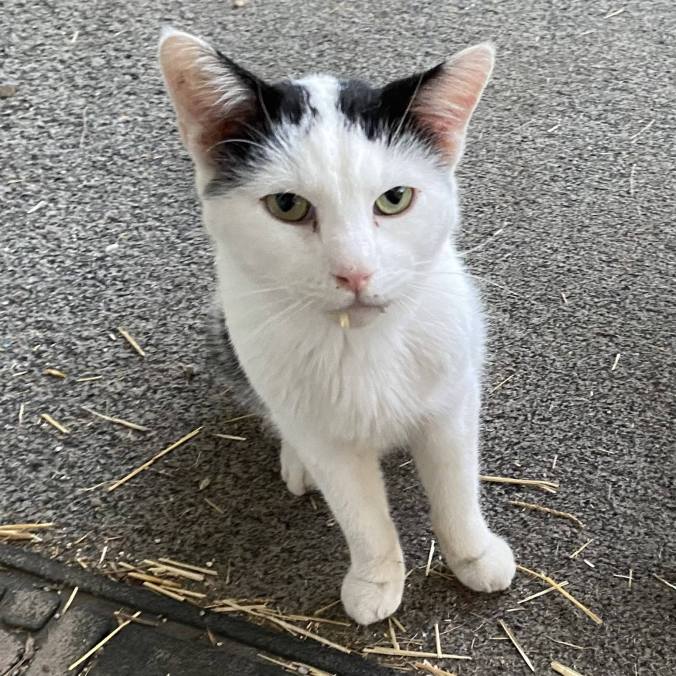
I’m a colony cat caretaker. My porch is visited by several stray and feral cats that have nowhere else to go. I feed them, monitor their health, and provide relief from extreme weather with my dedicated community cat shelter. On occasion, I intervene to locate owners of friendly strays and vet them for adoption if owners can’t be found. Many of the cats I care for are so feral that I never even get to see them in person, I watch them from my doorbell camera on my porch and a cat cam in the shelter. There are over ten cats that regularly visit me, all have been feral at one point, some are coming around as they grow to trust me. We trapped and neutered our first, a black and white cat we call “Spooky”, about a month ago. Since then, he has become so much more friendly that I was actually allowed the honor of petting him recently! This has encouraged me to do more.
I firmly believe that in order to combat the homeless cat crisis and improve the quality of life for those cats who unfortunately have no choice but to tough it out on the streets, TNVR is necessary. If you feed ’em, fix ’em! No kitty should ever go hungry, but if you just continue to feed a colony without trying to control its population growth, you may unintentionally be contributing to the cycle of suffering.
I don’t mean to shame anyone for feeding without fixing- you may not be aware of the consequences and might not realize there are resources available to help you help them. I’ll get to the resources later on in the article, but first, let me tell you about the kitties we got fixed and vaccinated, and what they taught me about the cost of doing nothing aside from offering a meal.
Fredward
The first time I got a good look at Fredward was through my cat cam, and even from that grainy footage I could tell something wasn’t right. He had been visiting my community cat shelter for a while, but he’s so feral I had never gotten close enough to really see him with my own eyes. About a week before we set the traps for our TNVR appointment, I noticed his tail. The fur looked messy and disheveled, and I could tell from the way he carried himself that he was in pain. I assumed maybe he had gotten into a fight. I worried about him all week. When I saw him walk into that trap, I cheered so loud he probably heard me from inside the house where I was eagerly watching him on my doorbell camera.
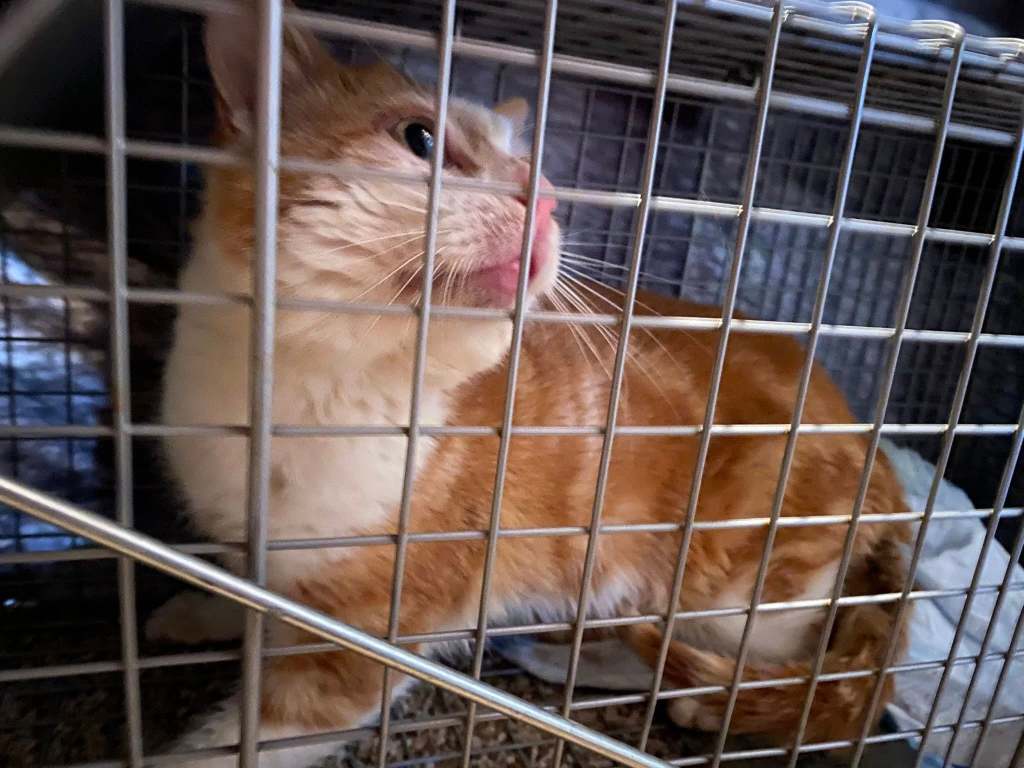
I still couldn’t get a good look at his tail because the trap had to stay covered so he wouldn’t thrash around and hurt himself, so the mystery of what was going on back there had to wait. It wasn’t until the vet examined him that we got our answer. His tail was so severely matted with cockleburs that it had to be completely shaved. On top of that, he had a serious flea infestation requiring strong medication, and ivermectin for ear mites. Those fleas were eating that poor boy alive. He reeked of a foul odor and had some conjunctivitis to boot. Fredward was a mess. But he didn’t have to be anymore thanks to our intervention.
Cali
Not every cat I trapped that day came in with visible problems like Fredward. Cali, a young shorthaired calico, looked relatively healthy from the outside. What I didn’t know until after her surgery was that she was pregnant and so dehydrated that she required subcutaneous fluids.
I had included instructions in my vet orders that any pregnancies should be aborted during spay surgery. I want to be transparent about that decision, because I know it may be difficult for some people to hear. I made that call in advance, before I even knew Cali was carrying kittens, because I already understood what bringing a litter of feral kittens into the world really means. Most vets who work with feral cats will recommend spay abortion because they understand what the alternative would have been as well.
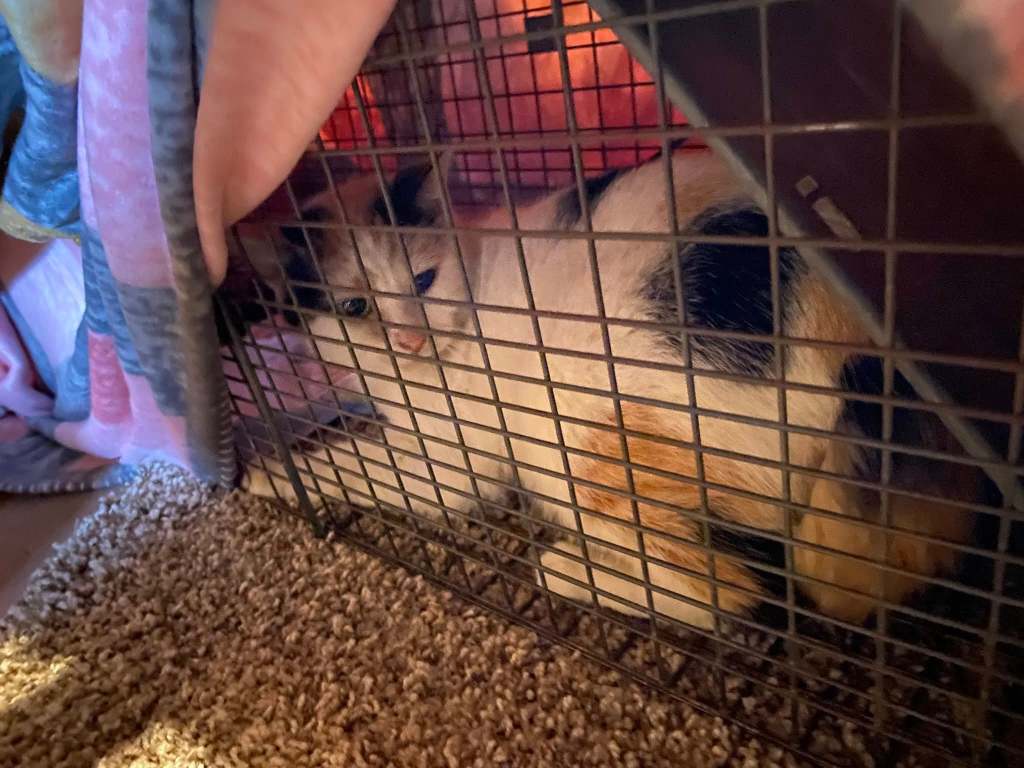
Those kittens would have been born into the same hard life their mother has known. There is a 75% chance of dying before six months of age (from starvation, trauma, disease, or exposure), and it means there would be more cats added to a cycle of suffering that nobody wants. Cali was already dehydrated and struggling just to care for herself. Asking her body to carry, deliver, and nurse a litter on top of that could have put her own life at risk. Cali came out of that clinic spayed, rehydrated with subcutaneous fluids, and with her hardest days hopefully behind her.
According to a peer-reviewed study of over 2,000 female cats (Nutter et al., 2004, via the Feral Cat Spay/Neuter Project), a single unspayed female feral cat produces an average of 1.4 litters per year with roughly 3 kittens per litter. Over just five years, that’s approximately 21 kittens, and even accounting for the heartbreaking 75% kitten mortality rate, around 5 of those cats survive to reproductive age and start the cycle all over again. By spaying Cali, we didn’t just prevent three kittens from being born into suffering. We interrupted an entire generational chain.
I want to address something that some readers may be wondering: why not keep her contained until she gave birth and then spay her afterward? For a feral cat, prolonged confinement is genuinely traumatic. Cali was already stressed from being trapped, and I had no safe space to house her separately even if I had wanted to, as I have three cats of my own and a foster in my home. I trapped Cali the day before the clinic specifically to minimize the time she would have to spend confined and frightened in a trap. Keeping a feral cat contained for weeks under those conditions would have been its own form of cruelty, and releasing her unspayed afterward would have defeated the entire purpose, as she would likely never risk entering a trap again. The most merciful path forward for Cali was the one we took.
Waffles (a.k.a “Fancy Cat”)
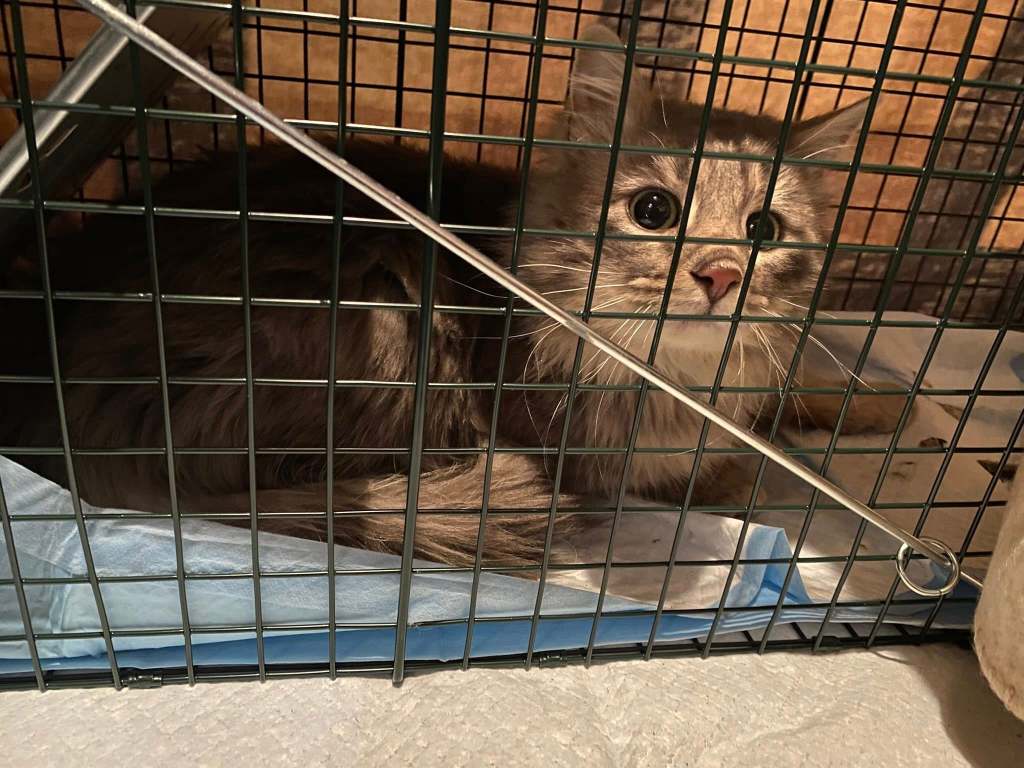
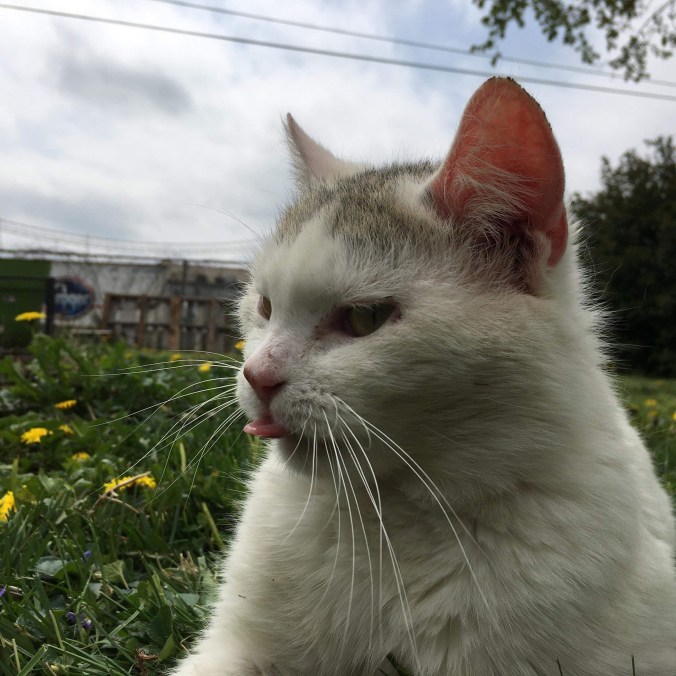
Waffles is a gorgeous longhair tabby that appears to be around a year old or less, which means we got to him early. He came back with a clean bill of health, no concerning findings, just a young cat who got intercepted before he could spend years contributing to the population cycle. Sometimes the best outcome is the uneventful one, and for Waffles, that’s exactly what we got. I am so relieved he is healthy, and I hope his best days are ahead of him.
Theo (a.k.a. Fanta)
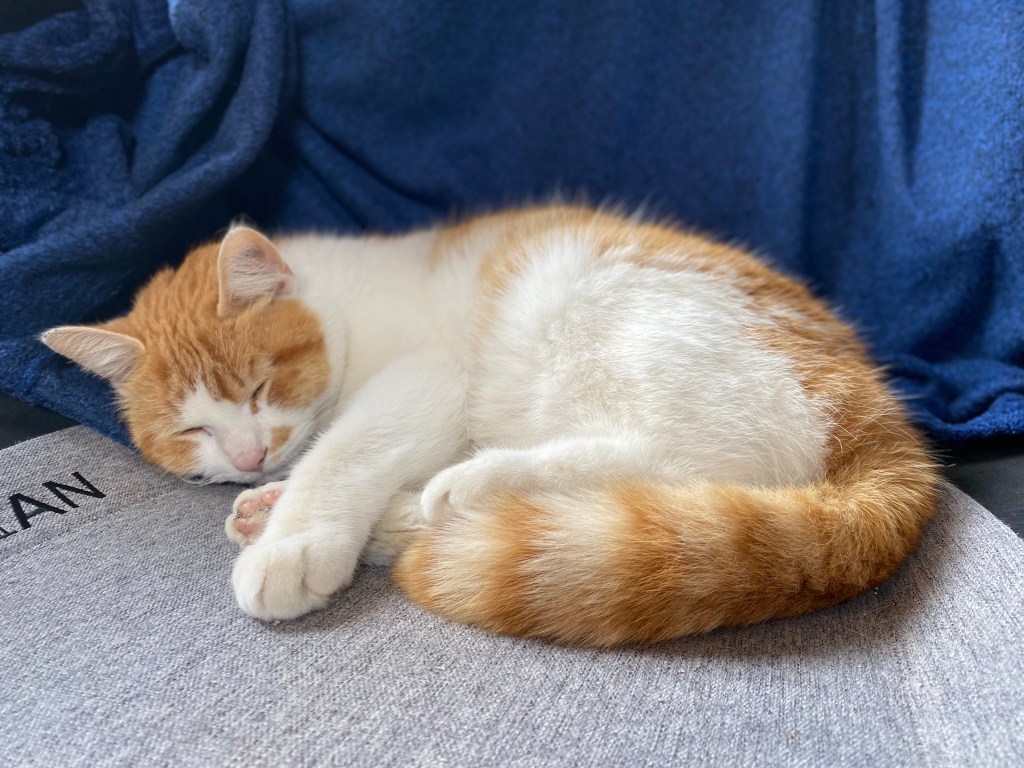
Theo was a different story. Unlike the ferals, Theo is a friendly boy who had been abandoned by his previous owners (who called him Fanta). We actually thought he was female at first, because his previous owners said he was and I just never questioned it or checked for myself. We assumed “she” needed fixed, so one of the three appointments I made was specifically for that cat to keep “her” from gifting us with kittens. Public Vet noted the mistake and sent him home with a tattoo to indicate he was already fixed so he wouldn’t have to undergo unnecessary surgery again.
I had him tested to make sure he was disease free before integrating him into the household, and he was able to recover comfortably in a cat condo in my office rather than the basement kennel setup. He will be going to a rescue that can place him in a wonderful home with rigorous adoption standards. Every cat’s situation is a little different, and it’s worth taking the time to assess what kind of care and recovery setup each one needs. If you can avoid having to send a cat back to a life on the streets, it’s always worth seeing that happily ever after to foster a rescue for a little while.
TNVR made a difference.
Cali would have given birth to three kittens that would have suffered and died on the streets or gone on to continue the breeding cycle and contributing to exponentially more suffering. If I had not intervened to get Fredward the care he needed, that flea infestation left untreated had the potential to become life-threatening, and he certainly would have continued to suffer from those cockleburs. Thanks to our help, he will be a much happier, healthier cat. Waffles would likely have gotten injured fighting other males and causing who knows how many pregnancies. While not specifically a TNVR case, Theo, who is currently chilling beside me happy as can be in a nice soft bed while I write this, will never have to return to a life on the streets, and I think that’s worth mentioning. Sometimes you’ll come across friendly homeless cats that deserve a better life as well.
Beyond Population Control: The Behavioral Benefits of TNVR
Population control is the most obvious reason to do TNVR, but it’s far from the only one. The behavioral changes that follow spaying and neutering are significant, and they benefit not just the cats themselves but the entire community around them.
Intact male cats produce testosterone that mixes with their urine and causes the strong, pungent odor of their spraying. After neutering, that smell is dramatically reduced. In fact, altering a cat can reduce marking behavior by as much as 85%. (Source: VCA Animal Hospitals) If you’ve ever had a feral tom spray near your home, you know exactly why that matters.
Research has also found that after neutering, cats tend to roam less, which is better for their safety and reduces conflict with neighbors. With decreased competition for mating, cats are also less likely to suffer injuries from fighting. They also tend to become more social and affectionate towards other cats as well as their human caretakers if they are lucky to have them. As an added bonus, neutered males returned to their territory will defend that territory, making it less likely that unaltered males will move in and start the cycle of overpopulation all over again.
TNVR doesn’t just reduce the number of cats. It makes the cats that remain quieter, healthier, less likely to be injured, and less likely to end up in conflict with the humans around them. It’s a better outcome for everyone involved, cats and neighbors alike.
How I Made It Happen (And How You Can Too)
I want to walk you through exactly how I pulled this off, because I think a lot of people assume TNVR is more complicated or expensive than it actually is.
My first step was booking appointments through Public Vet, a nonprofit mobile spay-neuter clinic that serves Indiana, Ohio, and California. They are a mobile operation, which means they come to you, visiting Connersville and surrounding areas fairly regularly. I scheduled three appointments and immediately applied for their financial assistance program, which I was approved for within just a few hours. That assistance reduced the cost of each spay or neuter from $100 to just $50 per cat, which included the $10 deposit I paid to secure each appointment. Public Vet also offered me a free 3-way vaccination for each cat, but I chose to pay an additional $35 per cat for the 5-way vaccine so that the Feline Leukemia vaccine would be included. Considering the unfortunate prevalence of FeLV in our area, I felt that was worth every penny. We unfortunately have lost two friendly community cats, Doobert and Scooter, to this devastating disease. The heartbreak of their deaths was enough to encourage me to pay a little extra to include that vaccination and hopefully help spare the other community cats from sharing the same fate.
Before trapping, I made a post on Facebook estimating I would need $290 to get three cats fixed and vaccinated. My community rallied and hit that goal within just a few days. I also put together an Amazon wishlist of supplies for the recovery zones, and generous folks donated two 36″ dog crates, kennel bowls, and Catego flea treatment for all the cats. I purchased a third kennel and a humane live trap myself, and borrowed two more traps from the Fayette County Animal Shelter, who were happy to lend them for the cause. Don’t be afraid to ask your local shelter, many are glad to support community TNVR efforts.
The day before my appointment I reached out to Public Vet to ask about a fourth slot, since I still had an open trap and a chance to catch one more cat. As luck would have it, there had been a couple of cancellations, and I was able to secure that extra appointment on the spot. That’s how Waffles ended up coming along for the ride. All in all, the total for my Public Vet appointments came to be $355, and was entirely covered by donations from friends on Facebook. I had a little money left over from fundraising, which I’m saving for the next batch of TNVR I’ll be doing in June.
After the clinic, the three feral cats (Fredward, Cali, and Waffles) came home to individual recovery zones in my basement, which is quiet and kept separate from my resident cats. Each had their own kennel, litter box, food, water, and a soft fabric cat house to hide in. Every kennel was fully covered with a blanket to keep them calm. I also set up night vision cameras in each kennel so I could check on them without disturbing them, and I put an old Amazon Echo to work playing continuous cat purring sounds to help keep them relaxed. The cameras and the Echo aren’t strictly necessary, but if you have them lying around, I’d recommend it.
We kept the males for four days rather than the standard 24 hours because we had some nasty cold snowy weather move in, and I didn’t want to release them into that (this was only possible because of the kennels, DO NOT keep a feral cat in a trap for longer than 24 hours if you must keep them in a trap). Thankfully they cooperated by staying calm and eating a little here and there. This is worth noting because if they had gone on a hunger strike, as some ferals do in confinement, I would have had to release them sooner regardless of the weather. Cali stayed one extra day beyond the males to give her a little more healing time, and I released her the following day. She was looking great.
Resources
For Friends in the Connersville Area
If you’re local, Public Vet is your best bet for affordability. Check pub.vet regularly for upcoming clinic dates in your area, and don’t hesitate to apply for financial assistance, the process is fast and straightforward. If Public Vet doesn’t have availability, Animal Care Alliance in Richmond is another feral-friendly option. They do excellent work, and while their prices are higher than Public Vet, they are still a low-cost clinic by any standard.
For Friends Elsewhere in the U.S.
If you’re outside our area, the Alley Cat Allies Community Resource Tool allows you to search for low-cost spay and neuter clinics by zip code. It’s the most comprehensive national directory available and a great place to start.
You Don’t Have to Trap a Single Cat to Make a Difference
I want to be upfront about something: I recognize that not everyone is in a position to do what I did. I own my home, which means I don’t have to navigate a landlord or apartment restrictions to house recovering cats in my basement. I have access to a truck to transport them. I have the time and physical ability to monitor them around the clock. Not everyone has those things, and that’s okay. There are still meaningful ways to contribute.
If you’re an Indiana resident, one of the easiest things you can do is switch to the Pet Friendly license plate through Pet Friendly Services of Indiana. The plate costs $40, with $25 going directly to support spay and neuter programs, and 100% of the funding stays in Indiana. Each year, plate holders collectively help fund more than 15,000 spay and neuter surgeries statewide. That funding is part of what makes financial assistance programs like the one I used through Public Vet possible. You can switch to the plate at any time through the myBMV website, and as a bonus, Pet Friendly plate holders now receive perks at Jiffy Lube Indiana locations, including 50% off tire rotations and $25 off synthetic oil changes. Good for the cats and good for your car, too!
Beyond the plate, you can donate trapping supplies or funds to someone in your community who is already doing TNVR (in the Connersville area, that’s MAKK’s Street Cat Rescue!), share articles like this one to raise awareness, or simply ask your local shelter whether they loan traps and spread that information to others. Every little bit moves the needle.
What I Learned (And What I’ll Do Differently Next Time)
I want to be honest with you about some of the practical realities of post-surgery recovery hosting, because nobody really warned me about a few of these things and I’d like to save you some trouble.
First, the smell. Intact and recently intact feral cats produce a powerful, distinctive odor, and when you have several of them housed in an enclosed space, it makes itself known. I made the rookie mistake of setting up the recovery zones right next to my HVAC intake in the basement, and the smell made its way through the entire house with impressive efficiency. Next time, I’ll be setting up as far from the intake as possible. The good news is that the smell fades fast. Just one day after releasing the males, it was already completely gone.
On the subject of recovery zones: while it’s common practice to leave ferals in their traps to recover and release them after just 24 hours, my mentor and I both felt that moving them into 36″ kennels was more humane. Since the cats are still groggy from surgery, transferring them from the trap to the kennel is easy and low-stress. We released all three cats directly from their kennels back to the spots where they were originally trapped.
For next time, I’m also planning a few kennel upgrades based on things I wish I had known going in. I’ll be securing the food and water bowls to the side of the kennel door for easier access without having to reach inside, and the added height should help keep litter from being kicked into the bowls by a restless cat pacing around. Speaking of litter, my mentor pointed out after the fact that natural pine litter is safer for cats recovering from surgery than clay litter, since they spend so much time lying directly in it. That one’s going on the list for next time too.
This was my first TNVR effort and while it wasn’t absolutely perfect, every round I’ll get a little better at it. Looking forward to the next one when Public Vet comes back to town in June!
The Elusive Muffin
I want to close by telling you about the one that got away.
His name is Muffin, and he is the world’s most endearing menace. I’ve known him since he was a kitten, and I have wanted to catch him for just as long. He has always been too feral and frankly too clever to be trapped. He is about five years old now, and in that time he has become something of a trap connoisseur. I have videos of him calmly walking into a live trap, eating the bait, and walking back out again without triggering it. Cool as a cucumber. Completely unbothered. He knows exactly what he’s doing.
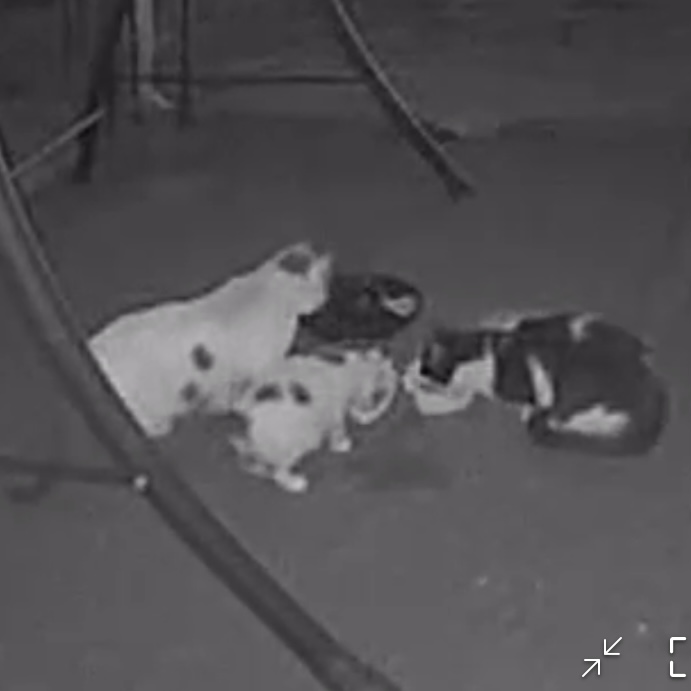
He was my original target when I set those traps last weekend. He eluded me again, of course. Just last night, I caught him on my Ring doorbell camera, bold as ever, eating on my porch alongside three other feral cats. Two of them were kittens. One of them had markings suspiciously similar to his own. I’ve named that kitten Mini Muffin and I have every intention of getting them both trapped and fixed!
Muffin is still out there, still busy, still completely unaware that his days of contributing to the local gene pool are numbered. One day he’ll step just a little too far into that trap, and we’ll finally have him.
But here’s the thing about Muffin: every neighborhood has one. Every community has a feral population that is quietly, persistently growing while most people look the other way. The difference between a neighborhood that has a Muffin problem and one that doesn’t isn’t luck. It’s people who decided to do something about it.
You don’t have to trap every cat. You don’t even have to do it perfectly. You just have to do what you can to help. Give TNVR a try!
And when you do, your own neighborhood Muffin will end his terror reign of exponential homeless kitten production.
A NOTE ON AI ASSISTANCE: I used Claude, an AI assistant made by Anthropic, to help research and write this article. I am the human author of this piece, but Claude helped me find and verify statistics, fact-check claims, and give feedback on drafts along the way. AI services do consume energy and water. Based on industry estimates, this session used roughly the electricity of two to five smartphone charges and somewhere between half a cup and a few liters of water. I felt the benefit justified the cost, but I didn’t want to leave it unsaid. I made a $10 donation to the NAACP to help make up for the material cost my use of this tool and support the important work they do protecting at-risk communities from predation from data centers. I will also be abstaining from further use of generative AI for a while. It’s a genuinely useful tool, but the environmental impacts should not be ignored and I try to be mindful of my use because of that.
 Insomnia Doodles