I was born with a rare birth defect called Septo-Optic Dysplasia. Basically my Optic Nerve and Pituitary Gland didn’t develop properly. I’m also completely missing a membrane in the midline of the brain called the “septum pellucidum”. I’m completely blind in both peripherals and I have low vision overall thanks to the Optic Nerve Hypoplasia, and my pituitary gland is so small and malformed that it doesn’t function sufficiently enough, so as a result I have a condition called “Panhypopituitarism“, which causes a litany of other conditions; hypogonadism, hypothyroidism, Adult Growth Hormone Deficiency (AGHD), and a potentially life threatening condition called Secondary Adrenal Insufficiency. There are a ton of other comorbidities that come along with this complex condition as well, from metabolic issues to depression and anxiety. I’ve written about all of this before in other articles on this blog if you want to learn more about it!
I want to focus on Adrenal Insufficiency in this article, because this recently caused a pretty massive and awkwardly public road bump for me and I feel like a lot of folks don’t really understand how it was impacting my body. I want to help explain the science behind what happened to me so that folks can understand me better, because I know full well that from an outside perspective without that knowledge, I probably looked like I was exaggerating and being some kind of drama queen. I assure you, I was not, and it really pains me to think folks might be misjudging me because of my poorly understood medical issues. I’m hoping that sharing this can help some other folks sharing this diagnosis feel seen and understood, too.
What is Adrenal Insufficiency?
When most people think about adrenal insufficiency, they think of Addison’s disease, which is an autoimmune disorder which involves direct damage to the adrenal glands. But there’s another form of adrenal insufficiency—secondary adrenal insufficiency—that can often fly under the radar.
Secondary adrenal insufficiency occurs when the pituitary gland, which signals the adrenal glands to produce cortisol, isn’t working properly. The issue isn’t in the adrenal glands themselves, but in the brain’s ability to trigger them. This can happen when the pituitary gland is damaged or when long-term use of steroid medications disrupts normal pituitary function. In my case, it’s due to the birth defect.
Symptoms of secondary adrenal insufficiency can look like a number of other conditions, which makes it tough to diagnose. Fatigue, weakness, dizziness, and even depression can all occur. What’s particularly frustrating is that the severity of these symptoms often doesn’t match up with how a person is treated—fatigue can be misinterpreted as laziness, or dizziness can be chalked up to anxiety. Sadly, people have died due to complications of adrenal insufficiency not being identified as such in time to save their lives.
What’s the deal with Cortisol?
Cortisol is often referred to as the “stress hormone,” but its role goes far beyond just reacting to stress. It’s essential for many of the body’s most basic functions, from regulating metabolism to controlling blood sugar levels. It’s also critical for maintaining the balance of salt and water in the body, regulating blood pressure, and for supporting immune function.
When everything is functioning normally, cortisol levels fluctuate throughout the day, peaking in the early morning to help you wake up and gradually decreasing throughout the evening to prepare your body for rest. But when cortisol production is disrupted, whether from secondary adrenal insufficiency or another condition, that balance is thrown off. The body can’t respond to stress effectively, and it can’t properly manage everyday functions like keeping energy levels stable or dealing with infections.
The absence of cortisol also leaves the body vulnerable in ways that may not be immediately obvious. For instance, even a simple cold or minor stress can become overwhelming, because the body doesn’t have the cortisol it needs to regulate the immune response or adapt to the situation. This is why people with adrenal insufficiency often feel not just tired, but utterly drained, no matter how much sleep they get. Their body simply can’t produce enough cortisol to handle normal, daily stresses—let alone anything unexpected.
This isn’t just about feeling tired. It’s about a critical hormone that helps keep everything in your body running smoothly. Without it, every system in the body can start to slow down or misfire. It’s why the symptoms of secondary adrenal insufficiency can often seem mysterious or unexplainable. Fatigue, dizziness, muscle weakness—it’s all a sign that the body is in desperate need of cortisol but just can’t produce it in sufficient amounts.
What’s an Adrenal Crisis?
When the body is deprived of enough cortisol, it can lead to what’s known as an adrenal crisis. This is a medical emergency and one of the most serious risks associated with adrenal insufficiency.
An adrenal crisis occurs when the body is suddenly faced with a stressor—like an infection, injury, surgery, or even something seemingly minor like a bad cold or a significant change in routine—and it can’t produce the cortisol it needs to cope. Without adequate cortisol, the body loses its ability to respond to these stressors, which can cause a cascade of life-threatening symptoms.
Imagine it like running a car engine without enough oil or fuel—it might run for a while, but eventually, it’s going to break down. Similarly, without cortisol, your body just can’t keep up with the demands it’s being placed under. The first signs of an adrenal crisis often include severe fatigue, weakness, dizziness, nausea, vomiting, and confusion. If left untreated, it can escalate to dangerously low blood pressure, organ failure, and even death. It can escalate so quickly in some cases as well, so folks who have adrenal insufficiency have to carry an emergency injection kit with them at all times so we can self-administer the cortisol immediately. Brain death can occur within just 30 minutes of experiencing an adrenal crisis in some cases, so time is of the essence here.
What’s so unsettling is how easily an adrenal crisis can be triggered. It doesn’t always take a major health emergency to bring one on. Stress—whether physical, emotional, or environmental—can push the body to the brink when cortisol levels are insufficient. Something as simple as skipping a dose of medication or getting overly fatigued can set the stage for an adrenal crisis. It can come on suddenly, like in a traumatic event such as an automobile accident, or over a longer period of time like an extended period of stress or illness.
It’s important to recognize the early warning signs of adrenal crisis and seek medical attention immediately. Time is of the essence—getting cortisol back into the system through an IV or injection is the only way to prevent the situation from becoming life-threatening.
How is it treated?
Managing secondary adrenal insufficiency is all about balance, and every patient is different. Everyone who has adrenal insuffiencicy has to take corticosteroids to replace the cortisol the body is unable to create on its own. Most people take oral tablets for their daily dose. Some patients use a cortisol pump, similar to how diabetics manage their insulin, but this treatment has not yet been approved and is still considered experimental. I take my daily corticosteroids orally. Endocrinologists (the specialists who manage this condition) have differing opinions on what doses to prescribe, and timing of those doses as well. It’s a pretty chaotic scene in the medical field—folks seem to have a hard time agreeing on the exact right way to manage this condition. I’ve seen endocrinologists on both extremes of the spectrum, some prescribing too much and some too little. I feel like right now I’m in a pretty good place with my treatment.
In my case currently, my endocrinologist has me taking hydrocortisone tablets throughout the day—10 mg at 8 a.m., 5 mg at noon, and 5 mg at 4 p.m. The goal is to mimic the body’s natural cortisol rhythm, with the highest dose in the morning to help kickstart my day and smaller doses later to maintain energy.
Timing is key. If I take my last dose too late, it can mess with my sleep. Cortisol is a wakefulness hormone, so taking it too close to bedtime can make it harder to fall asleep. That means I have to find a balance between getting enough cortisol for energy and avoiding a disrupted sleep cycle. It’s a bit of a dance, really—adjusting doses as needed for stress or fatigue, while still keeping everything in sync with my natural rhythms.
The exercise debate:
One of the ongoing debates among endocrinologists is whether people with adrenal insufficiency should take extra corticosteroids before exercise. Some doctors recommend a small “boost” of steroids to help the body handle the physical stress of a workout, since cortisol levels naturally rise during exercise. Others argue that, with proper management, most people don’t need extra steroids just for a workout.
Personally, I’ve learned that the answer isn’t always clear-cut. On days when I’m feeling particularly drained or when my workout is intense, I might take a little extra hydrocortisone, just to be on the safe side. It’s not a one-size-fits-all approach, and it depends on how my body feels in the moment.
How do we compensate for increases in stress?
Stress dosing is a crucial part of managing adrenal insufficiency, particularly when you’re faced with physical stressors like illness, injury, or surgery. It’s also the most complicated part of living with adrenal insufficiency. Normally, your body would produce extra cortisol during these times to help manage the increased stress, but for those of us with adrenal insufficiency, our adrenal glands can’t make that extra cortisol on their own.
Stress dosing means temporarily increasing your corticosteroid dose during periods of heightened physical stress. The amount you increase depends on the severity of the stressor. For example, if you have an infection or get sick, the body needs more cortisol to fight off the illness and keep inflammation under control. My endocrinologist specifically recommends tripling my normal dose of hydrocortisone when I’m ill.
This increase in steroids helps mimic the body’s natural response to stress, where cortisol levels would typically rise by up to 5-10 times their normal level during an illness or injury. Without that boost, the body may struggle to cope, and you could risk symptoms like weakness, confusion, severe fatigue, and even adrenal crisis if the body can’t get the cortisol it needs.
The tricky part is that stress dosing isn’t something you do indefinitely—it’s a temporary measure until your body returns to a more stable state. Once the illness subsides or the stressor is removed, you can taper your dose back down to your usual level.
Why Stress Dosing is risky:
While lifesaving in the short term, stress dosing carries risks, particularly when done for prolonged periods:
- Suppression of the immune system: Cortisol has a strong anti-inflammatory effect, which is why stress dosing can suppress the immune system. It decreases the activity of white blood cells, making it harder for the body to fight infections. This suppression means a person on prolonged stress doses is more vulnerable to illnesses and may take longer to recover from infections.
- Metabolic effects: Long-term stress dosing can lead to weight gain, high blood sugar, and bone thinning (osteoporosis).
- HPA axis suppression: Excessive or prolonged stress dosing can further inhibit the hypothalamic-pituitary-adrenal (HPA) axis, delaying the body’s recovery of natural cortisol production (if any). I personally don’t have to worry about this complication because my pituitary gland is already ineffective, but this is a common risk of excess steroid use so I wanted to mention it here anyway.
Why you shouldn’t stress dose for long periods:
Stress dosing is meant to replicate the body’s short-term response to stress and should only last as long as the stressor persists. Over time, the higher-than-normal levels of corticosteroids can cause harmful side effects and exacerbate complications like high blood pressure, muscle weakness, and increased susceptibility to infections.
Balancing the immune system impact:
Even though stress dosing suppresses the immune system, it remains non-negotiable during times of illness, injury, or surgery. Without the additional cortisol, the body cannot effectively manage the physiological demands of stress, leading to severe consequences like adrenal crisis or even death. In other words, the immediate need to survive and stabilize outweighs the long-term risks of immune suppression.
When Life’s Stress Triggers a Cascade in Adrenal Insufficiency:
Recently, I faced a situation that perfectly illustrates the delicate balancing act of managing secondary adrenal insufficiency. It started when I took in a street cat named Mooch. He was incredibly sweet and well-behaved, but my small house was already home to two senior cats. Mooch didn’t get along with other cats, which meant I had to keep him isolated. In such a small space, this was an enormous challenge.

Initially, I planned only to have Mooch temporarily—to get him neutered and then return him to the street. However, at the vet, I learned he had already been fixed, and a little digging in local groups on Facebook confirmed my suspicions: Mooch wasn’t just a stray. He had been abandoned by his previous owners. With the weather turning colder, I couldn’t bring myself to put him back on the street, even though I knew keeping him inside would add significant stress to my life.
Over the next couple of weeks, I struggled to find him a foster home or adopter. The stress of juggling my health needs and Mooch’s care started to take a serious toll. My body weakened alarmingly due to the strain on my adrenal insufficiency, but I hesitated to stress dose my steroids. It was flu season, and I didn’t want to risk weakening my immune system.
As time passed, I became desperate. I made a heartfelt post explaining that I feared I might have to return Mooch to the streets, not because I wanted to, but because my health couldn’t handle it. Some people misunderstood my intentions, assuming I was being cruel or abandoning him. That judgment stung deeply, but I held onto hope. Thankfully, the local rescue community stepped up to help, and we found Mooch a loving home before I reached my breaking point.
Unfortunately, the stress of those final days took its toll. My body was becoming so weak that even sitting upright for very long took more effort than I had the energy for. The brain fog was getting intense as well, it was so difficult to concentrate, I felt like I was in a daze. My hands weakened so much that it impacted my ability to participate in Inktober to the extent that I wanted to. After so many days of declining health, I had to start stress dosing my steroids to prevent a full adrenal crisis. Not long after Mooch left, I developed a bacterial upper respiratory infection. It wasn’t contagious, as confirmed by a visit to urgent care, but it was likely a consequence of my weakened immune system due to stress dosing.
Corticosteroids like hydrocortisone suppress the immune system by reducing inflammation and dampening the activity of white blood cells. While this is necessary to prevent adrenal crises during stress, it comes with a price. It can take days to weeks for the immune system to recover after stress dosing ends, depending on the duration and dosage. During this recovery period, the body remains more vulnerable to infections.
Thankfully, a course of antibiotics cleared up the infection, but I’m still in recovery mode. I’m continuing to stress dose until my illness resolves fully, and after that, I’ll need to isolate to give my immune system time to regain its strength.
This experience taught me a lot about the impossible choices people with chronic illnesses sometimes face. It’s not easy to weigh your health against doing the right thing for another living being. I don’t regret helping Mooch, but it was a sobering reminder of how precarious managing adrenal insufficiency can be.
Here’s Mooch now living his best life as an officially registered ESA in his wonderful new home:
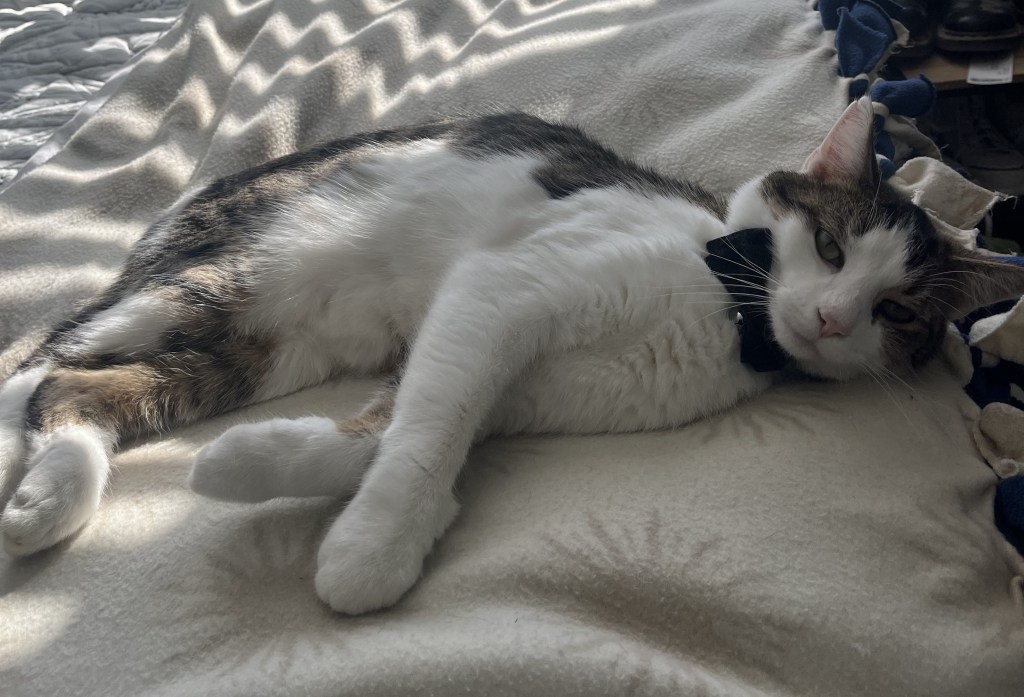
Living with secondary adrenal insufficiency is a constant balancing act—between doing what’s right, managing daily responsibilities, and keeping myself healthy enough to stay out of crisis mode. My experience with Mooch highlighted how quickly things can spiral when life throws a curveball. While I don’t regret helping him, it reminded me of the razor-thin margin of stability I often operate within.
For those of us with adrenal insufficiency, even small stressors can have cascading effects. It’s not just about feeling tired or unwell; it’s about how these challenges ripple through every system in the body, forcing us to make tough, sometimes heartbreaking decisions. The science is clear: stress dosing can save lives, but it also comes with risks that aren’t always immediately visible to others.
By sharing this story, I hope I’ve shed some light on what it’s like to live with this condition and why choices that might seem dramatic to others are often calculated acts of survival. I hope it helps others with adrenal insufficiency feel seen and reminds everyone that what you see on the outside rarely tells the full story. Whether it’s understanding a friend’s condition or supporting a loved one, a little compassion and awareness can go a long way in helping someone navigate life’s inevitable challenges.
 Insomnia Doodles